
Simple Mindfulness Practices for Stress Reduction: A Comprehensive Guide
By Viraj V. Tirmal, MD | 3905 National Drive, Suite 220, Burtonsville, MD 20866 Phone: 240-389-1986
In our fast-moving, always-connected world, stress has become nearly universal. Yet, navigating daily pressures with clarity, calm, and emotional balance is possible—with proven tools like mindfulness. Grounded in ancient wisdom and validated by modern science, mindfulness offers a path to reduce stress, strengthen resilience, and support overall health. Whether you’re completely new or looking to deepen your experience, this guide empowers you with practical, research-tested strategies for everyday living.
Understanding Mindfulness: Foundations and Key Principles
Mindfulness is the intentional, non-judgmental awareness of the present moment—observing thoughts, emotions, and bodily sensations as they arise. It’s about showing up for your own life, fully, with compassion and curiosity rather than criticism or avoidance. Jon Kabat-Zinn famously defined mindfulness as “paying attention, on purpose, in the present moment, and non-judgmentally.”
Key Attitudes that Nurture Mindfulness
- Non-judging: Observing your experience as it is, without labeling it good or bad.
- Patience and acceptance: Letting things unfold in their own time, releasing expectations.
- Beginner’s mind: Approaching each moment as new, even if familiar.
- Trust and letting go: Having confidence in your inner experience and being willing to release attachment to outcomes.
These qualities, described in greater detail at PsychCentral, form the basis for meaningful and sustainable mindfulness practice.
How Mindfulness Reduces Stress: The Science Explained
Research confirms that mindfulness is much more than a fleeting wellness trend. Scientific studies show that regular mindfulness practice:
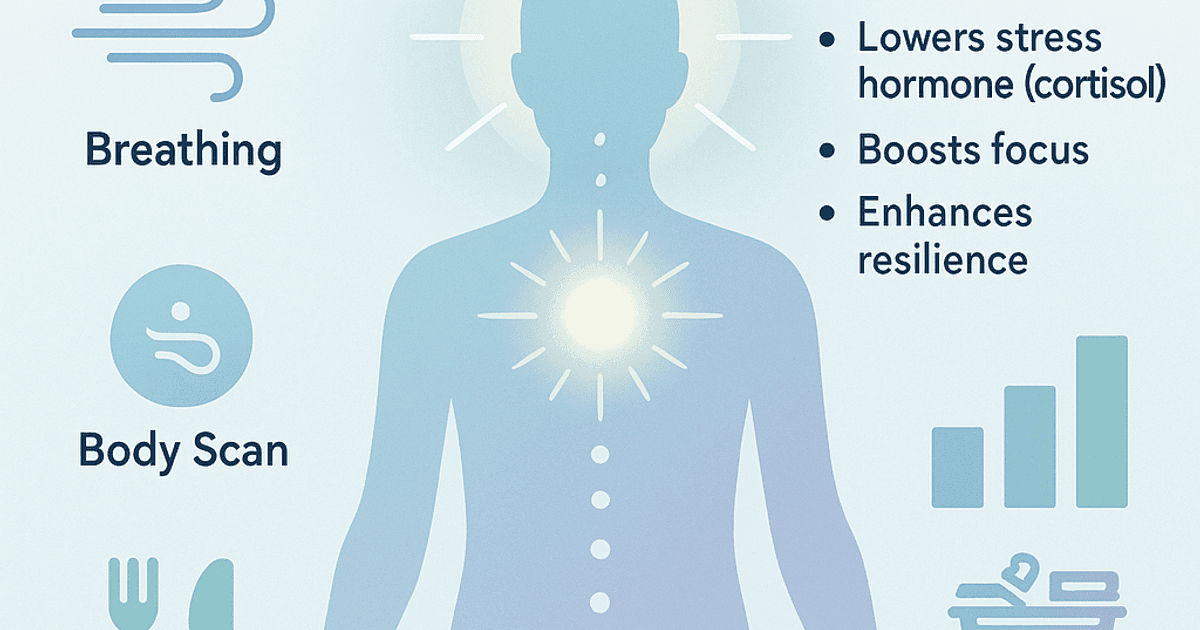
- Lowers levels of the "stress hormone" cortisol
- Improves attention, focus, and cognitive flexibility
- Strengthens emotion regulation—helping you “respond” rather than “react” to stress
- Promotes neural changes (such as increased gray matter in the prefrontal cortex and reduced amygdala reactivity) as shown by neuroimaging studies
Over time, mindfulness cultivates a resilient mind, making you less vulnerable to chronic worry, rumination, and emotional overwhelm. Learn more from the APA Mindfulness Resource.
Simple Mindfulness Techniques for Stress Reduction
1\. Focused Breathing
Slow, conscious breathing is one of the fastest ways to engage the body’s “relaxation response.” Try the Three-Minute Breathing Space:
- Find a comfortable seated or lying position.
- Close your eyes, if comfortable. Notice any sounds in your environment, then begin to attend to your breath. Feel the rise and fall in your chest or belly.
- If you become distracted, gently bring your attention back to your breath—no judgment.
- Continue for a minute or two, or longer as you wish.
For other accessible breathing techniques, see these simple exercises.
2\. Body Scan Meditation
Bring gentle awareness to each region of your body, from head to toe, observing sensations, tension, or comfort without trying to change anything. This helps ground you in the present and detect areas of stress or tightness—offering an opportunity to release physical tension. For a step-by-step guide, see Harvard’s relaxation techniques.
3\. Everyday Mindfulness (Informal Practice)
You don’t need a meditation cushion to practice mindfulness! Try bringing mindful attention to:
- Eating: Savor the flavors, textures, and aroma of your food, eating slowly and intentionally.
- Walking: Focus on the sensation of your feet on the ground, the rhythm of your breath, or the sights and sounds around you.
- Routine activities: Washing dishes, folding laundry, or even commuting can become mindful if you bring full attention to the physical experience.
Every present-moment experience is an opportunity. Read more about mindful daily activities here.
What Science Says: Who Benefits Most from Mindfulness?
Large-scale reviews and meta-analyses indicate that mindfulness-based programs—like MBSR and MBCT—consistently reduce stress. The evidence is especially strong for:
- People with chronic stress, anxiety, or recurrent depression
- Caregivers, healthcare professionals, and others in high-stress roles
- Adults seeking tools to prevent or manage the mental and physical effects of stress
The benefits are broad, but the key is developing a regular, compassionate practice. More on the evidence base can be found through this scientific review.
Getting Started: Practical Guidance for Mindfulness Beginners
- Set aside 2–5 minutes to sit quietly. You don’t need special equipment or previous experience.
- Notice your breath, bodily sensations, or choose a word/phrase (“anchor”) to bring your attention back when the mind wanders.
- Be gentle with yourself. Minds wander—it’s normal. The benefit comes from “returning,” not from having a perfectly still mind.
- Practice regularly. Pick a consistent time (mornings are great) and gradually increase your session as you’re comfortable.
More actionable guidance for newbies can be found in this beginner’s guide and Mindfulness.com’s overview.
Overcoming Common Challenges: Solutions for Everyday Obstacles
- Restlessness or busy mind? Try mindful movement (like walking) or accept that some sessions will feel more distracted—this is part of the process.
- Doubt or perfectionism? Remind yourself there’s no “right way” to be mindful—release the idea of specific outcomes.
- Getting off track? Use alarms, post-it notes, or practice with a friend for accountability.
“You can’t stop the waves, but you can learn to surf.” – Jon Kabat-Zinn
For more on common challenges and solutions, see this practical guide.
Integrating Mindfulness into Your Daily Life: From Intention to Habit
The real power of mindfulness comes when it becomes as routine as brushing your teeth. Try:
- Begin and end your day with 3–5 intentional breaths.
- Pause before meals to observe your senses—sight, smell, touch, and taste.
- Combine practice with routine activities: making tea, showering, or waiting in line.
- Set cues (phone alarms, sticky notes) throughout your space as gentle reminders.
Explore more strategies in this local mindfulness guide and SIYLI’s resource.
Gradually, as mindfulness becomes more natural, you’ll find greater ease in responding (not reacting) to stress—whether at work, home, or out in the community. Learn even more ideas at Calm Blog.
Recommended Resources for Deepening Your Mindfulness Practice
Books
- Wherever You Go, There You Are by Jon Kabat-Zinn
- The Miracle of Mindfulness by Thich Nhat Hanh
- Radical Acceptance by Tara Brach
- Mindsight by Daniel J. Siegel
Top Mindfulness Apps
- Headspace
- Calm
- Insight Timer
- The Mindfulness App
Online Courses & Free Resources
- Mindful.org – guided meditations, how-tos, and science summaries
- Coursera – university courses
- Greater Good Science Center (Berkeley)
- Curated resources from Laurie Cameron and the Wellness Society Guide
Are you ready to bring more balance and resilience into your life? Begin your mindful journey today with just a few minutes of attention—your body and mind will thank you. If you’re seeking a personalized approach to health and stress management, call our office at 240-389-1986 or visit us at 3905 National Drive, Suite 220, Burtonsville, MD.
As a solo MDVIP-affiliated concierge physician, I’m here to support your mental and physical well-being every step of the way.
Additional Reading — From Our Blog
You Might Also Like:
- Reducing the Stigma Around Mental Health: Strategies, Impact, and the Way Forward
- Recognizing Signs of Anxiety and Depression: A Comprehensive Guide to Early Identification and Support
- Managing Stress for Better Mental and Physical Health
- Setting SMART Health Goals for the Year
Remember: Like any healthy habit, mindfulness is a journey—start small and be patient with yourself. True change is gradual, and every moment you choose presence over autopilot is a step toward resilience.
References
- What Is Mindfulness? – Mindful
- 7 Principles of Mindfulness – PsychCentral
- Mindfulness – APA
- The Science Behind Mindfulness
- Mindfulness Is Associated With Lower Stress—Frontiers in Psychology
- Mindfulness Meditation: Research-Proven—APA
- The Neuroscience of Mindfulness Meditation
- 5 Simple Mindfulness Practices
- 7 Simple Mindfulness Exercises
- Harvard: Relaxation Techniques
- Managing Stress with Mindfulness
- The Science of Mindfulness
- Effects of Mindfulness on Psychological Health
- Beginner’s Guide to Mindfulness
- Mindfulness 101: A Beginner's Guide
- Five Obstacles to Mindfulness Practice
- Integrating Mindfulness Practices—Flourish Counseling MD
- 10 Ways to Integrate Mindfulness
- 5 Ways to Practice Mindfulness Daily
- Mindfulness Resources: Favorite Books & Apps
- The Ultimate Online Guide to Mindfulness & Meditation