**By Viraj V. Tirmal, MD | 3905 National Drive, Suite 220, Burtonsville, MD 20866 | **240-389-1986
Alzheimer’s disease remains one of the greatest health challenges for our aging population—a diagnosis that brings uncertainty for patients, families, and communities. But after decades of slow progress, we are now in a period of remarkable innovation in treatment and detection. As your dedicated primary care physician in Burtonsville, MD, my mission is to keep you informed and empowered with the latest advances so you can make proactive decisions about your cognitive health, whether for yourself or a loved one. Today, we’ll explore the breakthroughs, ongoing challenges, and what the future holds—including how to access the latest care, participate in research, and take actionable steps for brain health and overall wellbeing.
Breakthroughs in Drug Therapies for Alzheimer’s Disease
The last few years have seen history-making advances in Alzheimer’s treatment:
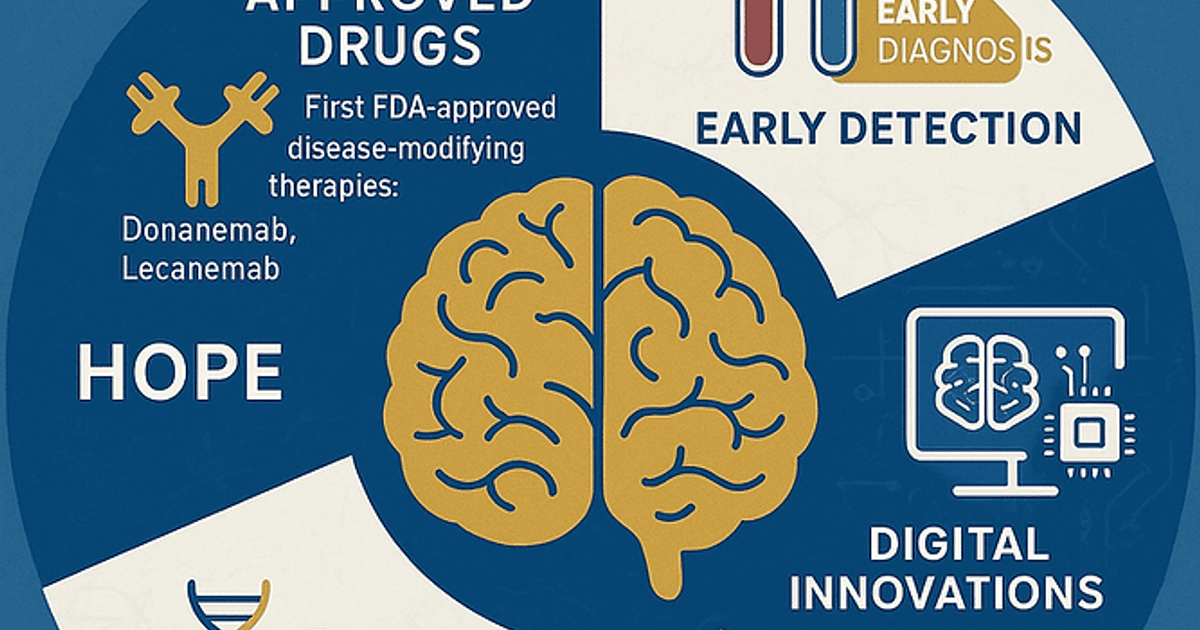
FDA approval of donanemab (Kisunla) and lecanemab (Leqembi), both monoclonal antibodies targeting amyloid plaques, mark the arrival of the first disease-modifying therapies. They are shown to modestly slow cognitive decline when given in early-stage Alzheimer’s, with future research exploring combination and precision therapies. (More at Alzheimer's International)
Earlier agents like aducanumab (Aduhelm) laid the regulatory pathway but raised difficult questions about efficacy, cost, and side effects. Ongoing research and careful patient selection remain central.
These therapies do not represent a cure—but they do offer hope for slowing symptom progression, preserving function, and buying valuable time for families.
For a clinical perspective on next-generation treatments, read: Mayo Clinic: What’s on the Horizon.
Advances in Early Detection and Diagnostic Biomarkers
Early and accurate diagnosis is critical—both for maximizing treatment benefit and for empowering individuals and families. Recent years brought:
Highly sensitive blood-based biomarker tests that can detect amyloid and tau proteins years before symptoms, making early Alzheimer’s diagnosis more accessible than ever. This allows primary care physicians to refer for advanced care sooner, and supports clinical trial enrollment. (Alzheimer’s Association summary).
New blood tests and digital screening initiatives promise a future where population-wide screening may become standard—a seismic shift from invasive analysis or costly scans.
Innovations in Imaging Technologies
Advanced PET scans now reveal both amyloid and tau, visualizing Alzheimer’s pathology even before symptoms begin and assisting in precise therapy selection. (Cortechs.AI: PET Imaging Innovation).
AI-powered MRI protocols and tools like QSM-MRI are more accessible, less expensive alternatives under development, mapping brain iron and microstructural changes. (NY Post; USC Imaging Innovations).
Genetics and Precision Medicine in Alzheimer’s Research
Recent research continues to identify new genetic risk markers and pathways, including mutations beyond traditional APOE-ε4, increasing both risk prediction and the potential for individualized prevention and care. (IU News; Press Release)
Genetics now guides risk counseling, earlier intervention, and distinct treatment trials—an approach resembling precision oncology.
Non-Pharmacologic Interventions: Lifestyle Medicine for Brain Health
While medications are critical, holistic care remains the mainstay for most, especially as part of an early, prevention-focused approach.
Multi-domain lifestyle interventions—combining heart-healthy diet, regular aerobic and strength exercise, cognitive/social activity, and stress management—are proven to slow or sometimes prevent symptom progression. (PMCID)
Cognitive training, caregiver support, sleep optimization, nutritional counseling, and addressing comorbidities are as important as medical therapy. (Neurology Advisor)
For customized prevention, read: Building a Personalized Preventive Health Plan.
Digital Technologies and Artificial Intelligence in Detection and Care
AI-enhanced imaging, digital voice/language biomarkers, and at-home cognitive testing are transforming early diagnosis and monitoring. (AI Innovations; [Digital Biomarkers—J&J](https://www.jnj.com/innovation/advancing-alzheimers-treatments#:~:text=Digital biomarkers are another way,changes earlier and more accurately.))
These tools enable earlier detection, better risk stratification for treatment, and remote care access, especially valuable for rural/underserved populations.
Explore how technology is reshaping healthcare: The Rise of AI in Personalized Primary Care and Telemedicine and Virtual Care.
Regulatory, Access, and Health Equity Challenges
Drug approval processes are evolving, but real-world effectiveness, cost, and equitable access remain major hurdles. (Alzheimer's Drug Development Landscape)
Limited diversity in clinical trials means minority and rural populations are frequently left behind. Closing these gaps—and ensuring access to both advanced therapies and supportive care—is an urgent public health priority. (Clinical Trials Landscape;Future of Care—AAIC 2024)
Clinical Trials, The Research Pipeline, and Future Directions
Active studies explore not only better anti-amyloid drugs but also interventions against tau, inflammation, and even gene therapies—plus major studies on digital tools, multimodal prevention, and caregiver support. (BrightFocus Foundation)
The research pipeline is the richest it’s ever been, with adaptive trial design and global collaboration increasing trial inclusivity and speed.
Consider participating in a trial to get early access to new care options—call our office or visit the NIH Clinical Trials Registry.
Public Health, Accessibility, and Community-Based Dementia Care
Major policy initiatives are focused on improving diagnosis rates, reducing health disparities, and supporting aging-in-place and caregiver programs. (AAIC 2024;National Plan to Address Alzheimer's Disease)
Integrated care frameworks that blend drug, digital, lifestyle, and support services are proving safer and more effective. (More)
Family, clinical, and community partnerships—supported by public education and access advocacy—are essential for sustainable progress.
Worried about your memory or a loved one’s brain health? Call 240-389-1986** or **book a cognitive health consultation online. We offer the latest risk assessments, preventive plans, screening, clinical trial referrals, and family care support—personalized to you and your future goals.
Related Reading—You Might Also Like:
Memory Health: Strategies for Reducing the Risk of Cognitive Decline
Building a Personalized Preventive Health Plan
Genomic Testing and Precision Medicine in Primary Care
The Rise of AI in Personalized Primary Care
Building an Exercise Routine That Works for You
Viraj V. Tirmal, MD | Concierge Primary Care | MDVIP Affiliate
3905 National Drive, Suite 220, Burtonsville, MD 20866
Phone: 240-389-1986 | Fax: 833-449-5686
Email: staff@tirmal-md.com | Join Our Practice
References
Donanemab update: New therapy approved by FDA
Mayo Clinic: Alzheimer's Treatments
AAIC 2024: Alzheimer's Blood Tests
AAIC 2024: Blood Test Biomarkers (PDF)
NY Post: New MRI Brain Scan for Alzheimer's
IU News: New Alzheimer's Gene Markers
Non-drug Therapies for Alzheimer’s: PMCID
Lifestyle Changes for Alzheimer's Symptoms
AI innovations for early detection
[Digital Biomarkers—Johnson & Johnson](https://www.jnj.com/innovation/advancing-alzheimers-treatments#:~:text=Digital biomarkers are another way,changes earlier and more accurately.)
Personalized Therapy Pathways in Alzheimer's
Cleveland Clinic: Anti-Amyloid Therapy FAQ
Alzheimer's Drug Development Landscape
Clinical Trials and Access Barriers