
Why Reviewing Your Health Goals Matters
As we approach the end of another year, many of us reflect on the aspirations and intentions we set for our health—some realized, others quietly sidelined as life unfolded. In my practice at 3905 National Drive, Suite 220 in Burtonsville, MD, I have seen firsthand how regularly revisiting and updating health goals is a powerful catalyst for true, lasting well-being.
Unlike the rigid resolutions we declare every January, effective health goals are dynamic, evolving alongside your life stage, priorities, and health status. A recent job change, a new medical diagnosis, or even a new interest can dramatically shift what matters most for your health. The best way to ensure your goals remain relevant and achievable is through a systematic review and update process.
Recognizing When It’s Time to Refresh Your Health Goals
Here are the telltale signs that it’s time to review your health priorities:
- You’ve reached—or consistently missed—a specific goal
- Life circumstances have shifted (e.g., new career, retirement, family changes, illness, pregnancy)
- Health status changes such as a new diagnosis or new medical advice
- Motivation wanes or shifts—what inspired you a year ago may not drive you today
Taking stock is not a sign of failure—on the contrary, it’s an essential step in a lifelong health journey (Million Hearts).
How Often Should You Review and Update Your Health Goals?
There’s no one-size-fits-all rule, but these guidelines work for most adults:
- Quarterly or semi-annual reviews are ideal for most people
- Monthly check-ins may benefit those with complex or chronic conditions
- Review after significant life changes such as a new diagnosis, surgery, or major lifestyle shift
- Ongoing tracking for those using technology like fitness trackers or health apps
If you’re already using wearables or remote monitoring, consider reading our guide on The Role of Wearable Technology and Remote Patient Monitoring in Modern Healthcare.
Tools and Techniques for Tracking Your Progress
Staying accountable and tracking your journey does not have to be tedious or high-tech. Here are some effective approaches embraced by our patients:
- Wearable devices: fitness trackers or smartwatches for activity, sleep, or heart rate
- Wellness apps: for logging moods, nutrition, medications, or exercise
- Paper planners or bullet journals: simple, tactile, and personal
- Printable worksheets and self-assessment logs
- Milestone celebrations for each achievement, no matter how small
For more on building foundational wellness routines, visit our post on Building an Exercise Routine That Works for You.
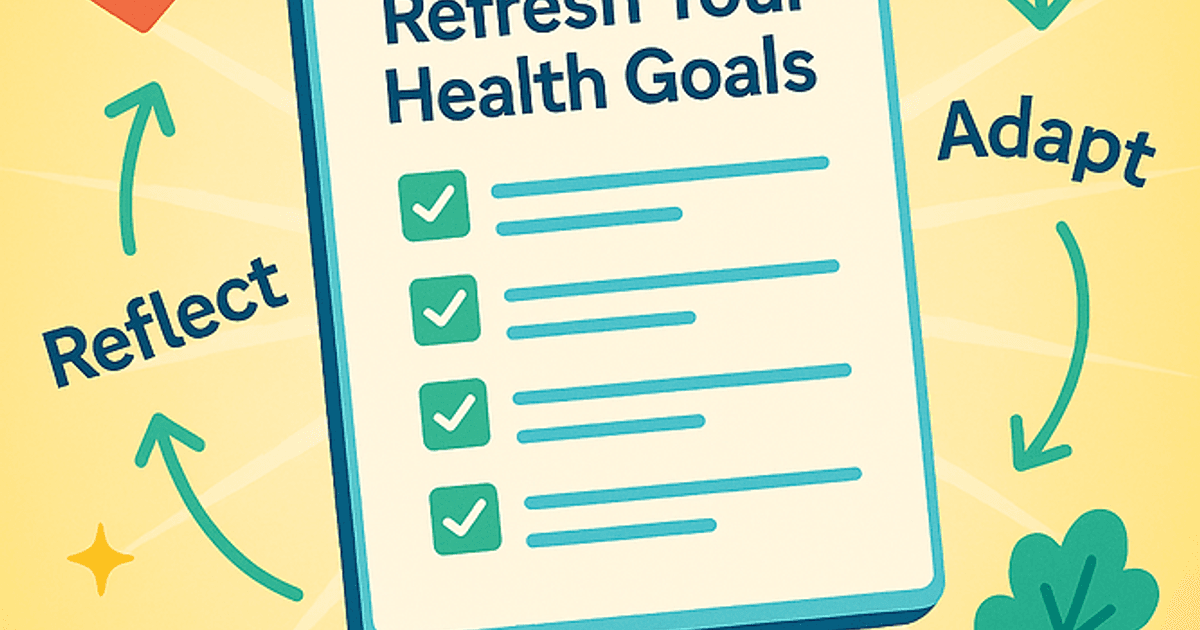
The Review Process — Reflect, Assess, Adapt
1. Reflect: Honest Self-Assessment
Ask yourself:
- Am I making measurable progress?
- What’s working? What isn’t—and why?
- Which goals still inspire me?
- What are my obstacles? Are they internal (motivation, fatigue, priorities) or external (resources, support, time constraints)?
Seeking input from a trusted friend, family member, or your healthcare provider can provide added perspective.
2. Assess: Celebrate Milestones, Identify Plateaus
Break larger ambitions into milestones. Celebrate completed steps—every pound lost, every extra 10 minutes of walking, every meal cooked at home. Use both quantitative (weight, blood pressure) and qualitative (energy, mood, confidence) markers.
If progress has stalled, revisit your strategy rather than your willpower. Plateaus are a sign to adapt your approach, not to give up (The Nation's Health).
3. Adapt: Adjust and Evolve
Goals may need to be scaled back or ramped up, depending on your current realities. Don’t hesitate to:
- Modify the intensity or frequency of an activity
- Swap out activities to prevent boredom
- Allow for setbacks without self-blame—these are natural parts of lasting change
For more on handling setbacks with resilience, see our advice for Managing Stress for Better Mental and Physical Health.
Overcoming Challenges and Setbacks
All progress involves hurdles. Here are evidence-based strategies to get back on track:
1. Normalize Setbacks
Everyone experiences setbacks. Reframe them as learning opportunities, not personal failures (Stat Wellness).
2. Practice Self-Compassion and Patience
Speak to yourself as you would a friend: supportively, not critically. Allow for imperfection and growth (Michelle Porter Fit).
3. Build Resilience
- Seek social support: engage friends or family
- Practice mindfulness: stress management and relaxation techniques help you reset after setbacks
- Adapt goals to your current life stage: If an old strategy no longer fits, change it
Need direction in building mental resilience? Consider our guide to Simple Mindfulness Practices for Stress Reduction.
4. Take Small Steps Forward
- Change one thing today—a five-minute walk, one glass of water, a healthy snack.
- Use reminders and non-food rewards to reinforce success.
- Reconnect with your underlying purpose (your “why”).
SMART Goals: Updating Goals for Lasting Success
When updating your targets, use the SMART framework for greater clarity and success:
- Specific: What exactly are you aiming to achieve?
- Measurable: How will you track progress?
- Attainable: Is it realistic given your circumstances?
- Relevant: Does it tie directly to your current priorities?
- Time-bound: Set clear deadlines or check-in points
Need more SMART goal ideas? Last January we covered Setting SMART Health Goals for the Year.
Real-World Examples:
- Evolving from “I want to lose weight” to “I will walk briskly for 20 minutes after dinner three days per week for the next month.”
- Adjusting from “I’ll cut out all sugar” to “I will reserve desserts for weekends and enjoy fruit during the week.”
- Shifting from “Exercise every day” to “Average 150 minutes per week, using several activities.”
As your achievements accumulate, gradually raise the bar or diversify habits. A goal mastered is a foundation for the next step.
If you’re refining your nutrition strategies, see our posts on Healthy Snacking: Options That Fuel Your Day and Reducing Sugar Without Sacrificing Flavor.
Staying Motivated and Accountable
Sources of Motivation
- Internal motivation: Rooted in your values, self-identity, and desire for well-being
- External motivation: Driven by accountability, rewards, recognition, or group participation (PositivePsychology.com)
Both types are valid; blending them often yields the best results.
Accountability Strategies
- Enlist a partner: Friend, family, or fellow patient can provide support and encouragement
- Join a group challenge: Organized health initiatives or classes boost participation
- Use technology: Fitness apps, reminders, or progress logs can prompt action (Flourish Counseling)
- Professional coaching: Qualified coaches or healthcare professionals can provide structure, advice, and motivation
Technology can add extra momentum—learn more in our overview of Health Gamification: How Gaming Elements Are Revolutionizing Fitness and Wellness Motivation.
The Crucial Role of Your Healthcare Team
No one should navigate their health journey alone. Partnering with your primary care physician or health professional is key to ensuring your goals are appropriate, safe, and evidence-based, especially for those with chronic or complex health conditions.
Your physician can:
- Review progress and provide guidance tailored to your health status
- Offer new strategies based on emerging medical research
- Safely help you adapt or elevate goals as your health evolves
- Connect you to resources—nutrition, exercise, therapies, specialty care
If you want to know more about developing supportive healthcare relationships, explore Building a Partnership with Your Primary Care Physician.
Taking Action: Your Year-End Health Review
Ready for next steps?
- Schedule dedicated time—now or at year-end—for self-reflection and goal review.
- Bring a trusted friend, family member, or schedule an appointment with a healthcare professional for input and support.
- Update your goals using the SMART framework and plan for the next check-in.
- Celebrate your progress—big or small, every improvement matters!
At my Burtonsville office, we thrive on helping patients evolve their health strategies for every chapter of life. If you need guidance, tools, or a fresh perspective, I encourage you to reach out. Whether it’s coaching you through a setback, celebrating a success, or updating your prevention screenings, compassionate, expert help is just a call or click away.
Let's Work Toward Lifelong Wellness—Together!
Ready to re-energize your health goals and set up a personalized care plan? Contact our team at 240-389-1986, email staff@tirmal-md.com, or schedule an appointment directly. If you’re not yet a member of our MDVIP-affiliated practice, learn how to join here.
Your best health is built one review at a time, and I look forward to supporting you every step of the way.
Related Posts You Might Find Helpful
- Setting SMART Health Goals for the Year
- Building an Exercise Routine That Works for You
- Healthy Snacking: Options That Fuel Your Day
- Managing Stress for Better Mental and Physical Health
- Building a Partnership with Your Primary Care Physician
- Health Gamification: How Gaming Elements Are Revolutionizing Fitness and Wellness Motivation
References
- Healthy is Strong My Personal Health Progress (Million Hearts)
- How Often Should Person-Centered Plans Be Updated? (NeuroNav)
- Tracking Progress for Physical Wellness Goals (GuideStone)
- Keep your health on course by tracking your progress (The Nation's Health)
- Reclaiming Your Health Goals: Top 5 Strategies (Stat Wellness)
- How to Bounce Back From Setbacks With Emotional Resilience (Michelle Porter Fit)
- 8 Tips for Setting (and Achieving) Your Goals (Colorado.edu)
- HEALTH GOALS - SMART Goal Examples (Dartmouth)
- Changing Your Habits for Better Health (NIDDK)
- 50 Short Term Goal Examples That Will Change Your Life (Primer Magazine)
- 6 Important Benefits of Motivation For Attaining Goals (PositivePsychology.com)
- The Role of Accountability in Achieving Health Goals (Flourish Counseling & Wellness)
- SMART Goals: A Collaborative and Patient-centered Approach to Care Coordination (ThoroughCare)