
Healthy Aging Month Special | By Viraj V. Tirmal, MD — Concierge Primary Care, Burtonsville, MD
Healthy aging isn’t about luck; it’s about strategy. Your bones and joints are the infrastructure that make independence, confidence, and an active life possible. While natural changes occur with age, decades of research show we can meaningfully slow bone loss, protect cartilage, prevent fractures, and keep moving with ease. In this physician’s guide, I’ll walk you through practical, evidence-based steps to build stronger bones, soothe joints, and reduce fall risk—plus how to personalize a plan that fits your body, lifestyle, and goals.
How Bones and Joints Change With Age—and Why That Matters
Bone remodeling slows: After peak bone mass (typically by our 30s), bone breakdown can outpace formation—accelerating for women around menopause and gradually in men thereafter.
Cartilage thins & joints stiffen: Wear, inflammation, prior injuries, and muscle weakness contribute to osteoarthritis and mobility limits.
Balance and reaction time: Subtle declines increase fall risk—especially when compounded by vision changes, medications, neuropathy, or home hazards.
The good news: targeted nutrition, smart training, ergonomics, and proactive care can significantly bend those curves in your favor.
Eat to Build Bone and Calm Joints
Nutrition is foundational for bone mineralization, muscle maintenance, and joint comfort. Focus on:
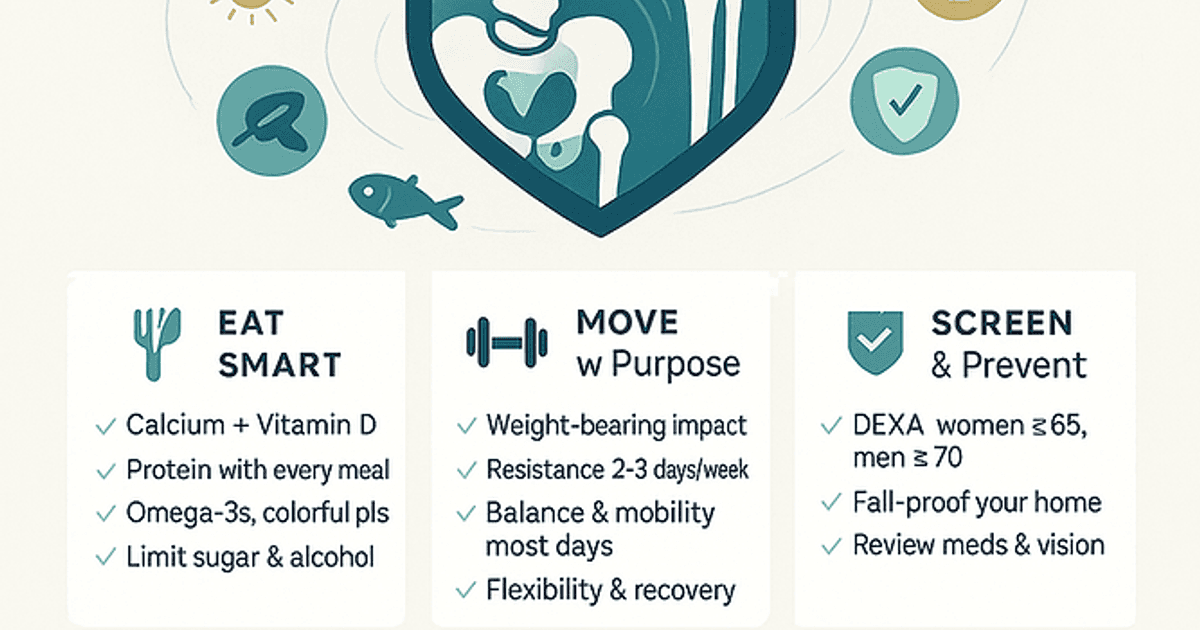
Calcium & Vitamin D: Essential for bone density. Aim to meet calcium primarily from foods (low-fat dairy, fortified plant milks, leafy greens, tofu with calcium sulfate, canned salmon/sardines with bones) and ensure adequate vitamin D from safe sun, food (fatty fish, fortified products), and, when needed, supplements. Talk with your physician about appropriate targets and testing for vitamin D status. [1,3]
Protein (with every meal): Supports bone matrix and muscle mass that protects joints and prevents falls. Include fish, poultry, eggs, legumes, Greek yogurt, and nuts/seeds. [1]
Magnesium & Vitamin K: Found in greens, beans, nuts/seeds (magnesium) and leafy greens/fermented foods (vitamin K), both support bone metabolism. [1,3]
Omega-3s & anti-inflammatory foods: Fatty fish, walnuts, chia/flax, colorful fruits/vegetables, and spices like turmeric may help modulate joint inflammation. [2]
Limit added sugars, ultra-processed foods, and excess alcohol: These can worsen inflammation and displace nutrient-dense choices. [3]
Want help translating labels into smarter choices? Explore Reading Food Labels: What to Look For and build your grocery plan with The Importance of a Balanced Diet: Macros and Micros.
Move to Improve: The Exercise Prescription for Bones and Joints
Exercise remains the most potent non-drug intervention for skeletal strength and joint longevity.
Weight-bearing impact: Brisk walking, hiking, stair climbing, dancing, low-impact aerobics stimulate bone formation.
Resistance training (2–3 days/week): Progressive loads for major muscle groups (legs, hips, back, core, arms). Strong muscles reduce joint load and fracture risk.
Power & functional moves: Sit-to-stands, step-ups, light jumps or heel drops (if safe), and tempo changes preserve fast-twitch capacity for balance reactions.
Balance & mobility (most days): Tai chi, yoga, Pilates, and targeted drills reduce falls and stiffness.
Flexibility & recovery: Gentle stretches and range-of-motion work maintain joint glide and reduce pain flare-ups.
New to strength training—or returning after a while? Start with Building an Exercise Routine That Works for You. Exercising in the heat? See safety tips in Beat the Heat: A Complete Guide to Safe and Effective Warm Weather Exercise.
Preventing Osteoporosis and Osteoarthritis: What the Evidence Says
Start early, stay consistent: Calcium-, vitamin D-, and protein-rich diets, impact and resistance training, and maintaining a healthy weight prevent bone loss and joint overload. Avoid tobacco and limit alcohol.
Protect your joints: Vary activities, learn joint-sparing techniques (hip hinge, neutral spine), and use assistive devices when appropriate. Address foot mechanics and footwear.
Monitor symptoms early: Morning stiffness, swelling, or activity-related pain benefit from sooner evaluation and targeted self-care, PT, or medical therapies to slow progression.
Posture, Ergonomics, and Everyday Mechanics
Small daily choices create big long-term differences for knees, hips, spine, and hands.
Spine smart: Alternate sitting/standing, keep screens at eye level, use lumbar support, and hinge from the hips when lifting.
Knee care: Avoid deep, loaded knee flexion if symptomatic; strengthen quadriceps, glutes, and hamstrings to unload the joint.
Footwear: Stable, cushioned shoes with proper arch support; consider orthotics for alignment.
Work & home ergonomics: Chair and desk heights, keyboard/mouse positioning, supportive mattresses and pillows all matter. A PT/OT ergonomic assessment can be invaluable.
Women, Men, and Midlife: Tailoring the Plan
Women & menopause: Estrogen decline can accelerate bone loss. Discuss bone density testing (DEXA), calcium/vitamin D sufficiency, resistance training, and whether menopausal hormone therapy is appropriate given your risk profile.
Men & aging: Bone loss occurs later but is under-recognized. Low testosterone, steroid use, smoking, alcohol, and chronic conditions raise risk—warranting screening and prevention.
Family history or early fracture: These are red flags to evaluate sooner and more intensively.
Testing, Treatments, and Supplements—What to Know
Bone density (DEXA): Recommended for women ≥65 (earlier if risk factors) and men ≥70 (or earlier with risk). Results guide tailored prevention or treatment plans. Consider repeat intervals based on baseline and risk.
Medications: If indicated, options include bisphosphonates, denosumab, SERMs, teriparatide/abaloparatide, or romosozumab—chosen according to fracture risk, comorbidities, and preferences.
Supplements: Calcium and vitamin D are often necessary when dietary intake is insufficient; dosing should be individualized. For joint pain, glucosamine/chondroitin, MSM, turmeric, and collagen are popular—evidence is mixed. Avoid “more is better”; quality and interactions matter. Review any supplement regimen with your physician.
Considering supplements? Read Debunking Common Myths About Multivitamins and Supplements before you buy.
Fall Prevention: Protect Your Independence
Falls are the leading cause of fractures in older adults—and among the most preventable threats to healthy aging.
Home safety: Remove loose rugs/clutter, add nightlights, install grab bars and railings, improve bathroom traction, and ensure clear, well-lit pathways.
Strength & balance training: Target lower-body strength (sit-to-stand, heel raises, step-ups), balance drills (single-leg stance, tandem walking), and tai chi.
Check vision & footwear: Update lenses; choose supportive, non-slip shoes.
Medication review: Sedatives, certain antihypertensives, and polypharmacy increase falls; regular reviews can reduce risk.
Vitamin D optimization: May reduce falls in those deficient; confirm with your clinician.
On the Horizon: Emerging Therapies
While lifestyle and established therapies remain first-line, research is rapidly evolving:
Regenerative approaches: Stem cell and tissue engineering strategies for bone and cartilage repair show promise in early studies.
Senolytics: Drugs that clear senescent (“aged”) cells to improve bone remodeling are under investigation.
Targeted anti-inflammatory & anabolic agents: Novel pharmacologic options aim to reduce cartilage degeneration and stimulate bone formation.
Most are not yet standard of care; discuss clinical trials and timelines with your physician if you’re interested.
Your 6-Week Strong Bones & Better Joints Plan
Week 1: Audit your diet (calcium, vitamin D, protein). Swap in two bone-friendly breakfasts and add a fatty fish dinner. Schedule a DEXA scan if due.
Week 2: Begin resistance training twice weekly (20–30 minutes) with safe form. Add daily 10-minute balance practice.
Week 3: Hit 7,000–8,000 steps/day or build brisk walking to 30 minutes, 5 days/week.
Week 4: Ergonomic tune-up at home/desk; adjust chair, monitor height, and sleep supports. Learn a hip hinge and practice with light lifts.
Week 5: Home safety makeover: improve lighting, declutter, add grab bars if needed. Book an eye exam and medication review.
Week 6: Reassess pain, stiffness, balance, and energy. Fine-tune your routine and plan next goals with your clinician.
Ready for a personalized bone & joint plan? Call 240-389-1986 or book an appointment online. New to concierge medicine? Join our practice for proactive, physician-led healthy aging.
Related Reading From Our Blog
Building an Exercise Routine That Works for You
The Importance of a Balanced Diet: Macros and Micros
Reading Food Labels: What to Look For
Debunking Common Myths About Multivitamins and Supplements
The Importance of Regular Health Screenings
Beat the Heat: Safe & Effective Warm Weather Exercise
References
Harvard Health: Essential nutrients for building bone
Orlando Orthopaedic Center: Nutrition for Joint Health
NIAMS: Exercise for Your Bone Health
SilverSneakers: Mobility Exercises for Seniors
NHS: Keep bones healthy over 65
IOF: Osteoporosis Prevention Strategies
Arthritis Foundation: Slowing Osteoarthritis Progression
Arthritis Foundation: Tips for Healthy Knees
MUSC Health: Posture Change With Age
NIH PMC: Gender Disparities in Osteoporosis
Better Health Vic: Ageing—muscles, bones and joints
Ohio State University: Bone health differences: men & women
Mayo Clinic Q&A: Osteoporosis and supplements
UT Southwestern: Supplements for joint pain
World Guidelines for Falls Prevention
Arthritis Foundation: Osteoarthritis and Falls
NIH PMC: Bone regeneration in inflammation
Nature: Ageing-related bone and immunity changes
ScienceDirect: Advances in targeted therapies for osteoarthritis
Viraj V. Tirmal, MD | Concierge Primary Care | MDVIP Affiliate
3905 National Drive, Suite 220, Burtonsville, MD 20866
Phone: 240-389-1986 | Fax: 833-449-5686 | Email: staff@tirmal-md.com
New patients: Join Our Practice | Appointments: Book Online