
**By Viraj V. Tirmal, MD | 3905 National Drive, Suite 220, Burtonsville, MD 20866 | **240-389-1986
Cardiovascular-Kidney-Metabolic (CKM) Syndrome is one of the most pressing, yet least understood, syndromes driving poor health outcomes in modern adults. If you’ve heard terms like “metabolic syndrome,” “chronic kidney disease,” and “heart failure” but wondered how they connect—or why diabetes and obesity suddenly seem entwined with heart and kidney problems—this guide is for you. In this post, I’ll break down CKM Syndrome’s causes, risks, prevention, and the latest clinical insights, with a focus on what you can do and how modern, integrated care can make a life-changing difference.
CKM Syndrome: What Is It and Why Should You Care?
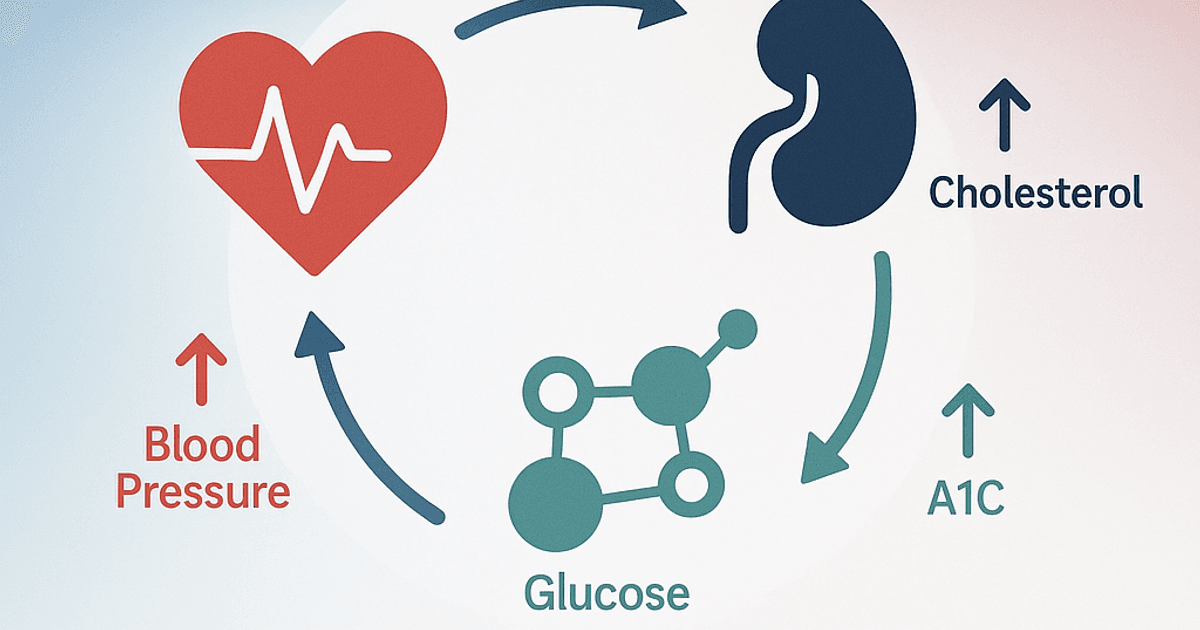
CKM Syndrome is a newly recognized clinical condition—defined and staged by the American Heart Association—that underscores how metabolic dysfunction (like diabetes or obesity), chronic kidney disease (CKD), and cardiovascular disease (CVD) are not isolated problems but form a vicious circle.
More than one in three adults in the United States already have at least three risk factors for CKM Syndrome.
Each “system” amplifies the others: diabetes and obesity drive kidney and heart problems; CKD accelerates heart disease; heart disease worsens kidney and metabolic function.
Socioeconomic stress, diet, inflammation, and genetics lie at the root.
Why does this matter for you? Because CKM Syndrome at any stage escalates your risk of heart attack, stroke, kidney failure, and early death. Yet, it is both identifiable and treatable—especially when approached proactively and holistically.
CKM Syndrome is not a moment in time, but a *continuum of risk*. That means earlier detection and action can truly change your health trajectory.
How to Know If You’re at Risk: Key Factors and Progression
Metabolic risk factors: Hypertension, abdominal obesity (“apple shape”), prediabetes/type 2 diabetes, high cholesterol or triglycerides.
Chronic kidney disease: Even early/protein-silent CKD increases risk. Testing is simple (urine protein, creatinine, eGFR).
Family history, sleep, mental health: Genetics, sleep disorders, and chronic stress all amplify CKM risk.
Social determinants: Food insecurity, unsafe environments, poor access to care or exercise.
CKM Syndrome is staged from 0 (“no risk factors”) through Stage 4 (“established cardiovascular disease”). Early-stage symptoms may be subtle: increased waistline, mild BP/sugar increases, or isolated lab abnormalities.
Screening involves reviewing your personal and family history, blood tests (fasting glucose/hemoglobin A1C, cholesterol, kidney function), urine testing, and blood pressure measurement. Modern risk calculators now integrate CKM risk factors for a clearer risk projection.
Do you know your blood pressure, cholesterol, A1C, and waist circumference? These four numbers, with your kidney health, are powerful predictors of future CKM risk.
Molecular and Cellular Mechanisms: The “Shared Soil”
Chronic, low-grade inflammation and cytokine dysregulation damage blood vessels, the heart, kidneys, and hormone systems.
Metabolic dysfunction—especially insulin resistance and fatty liver—alters energy use and hormone balance.
Oxidative stress and neurohormonal overactivity (i.e., the renin-angiotensin system) accelerate fibrosis, scarring, and organ decline.
Vascular/endothelial dysfunction: Makes arteries less flexible and prone to plaque.
Bidirectional organ cross-talk: Problems in one system (kidney, heart, metabolism) worsen others, often in parallel.
This vicious feedback loop is why diabetes is the #1 cause of kidney failure—and why kidney patients face the highest risk of cardiovascular death.
The Central Role of Diabetes and Obesity
Excess or dysfunctional fat creates “toxic” inflammation in blood vessels, heart tissue, and kidneys, triggers abnormal insulin signaling, and creates hormonal and metabolic imbalances. High blood sugar fuels oxidative stress and “hardens” arteries, kidneys, and the heart.
Chronic high sugar and insulin resistance drive the CKM spiral faster than any other factor.
Every percentage point reduction in A1C lowers kidney and heart risks noticeably.
Waist circumference is a better predictor than weight or BMI alone.
CKM Syndrome: Clinical Course and Why You Should Act Early
Without intervention, CKM risk factors accumulate and “stage up.” The further along, the higher the risk of major events:
Acute myocardial infarction (heart attack)
Major adverse cardiac/kidney events (MACE/MARE)
Hospitalization, disability, premature death
Reduced quality of life
Staging and progression are driven by both biology and environment—so coordinated, team-based care makes a real difference.
Prevention and Treatment: What Works in 2025 and Beyond
Lifestyle modification remains foundational: A Mediterranean, low-sugar diet; regular physical activity (ideally 150+ min/week); consistent weight management; sleep hygiene; and robust stress support.
Medications are more effective—and safer—than ever: SGLT2 inhibitors, GLP-1 agonists, and non-steroidal mineralocorticoid antagonists lower sugar, blood pressure, and kidney/heart risk—while protecting multiple organs.
Combination therapies (with personalized selection) target multiple CKM pathways.
Regular screening and care navigation: For at-risk patients, annual checks for kidney function, microalbuminuria, cholesterol/triglycerides, and cardiac risk factors are crucial.
Good news: CKM is reversible—especially at earlier stages and with active, personalized intervention. Prevention is still the best medicine.
Integrated, Team-Based Care: The Modern CKM Model
CKM care is best delivered by a coordinated team: primary care, cardiology, nephrology, endocrinology, behavioral health, and patient navigators, often including community nurses or virtual support.
Standardized protocols, care pathways, and remote monitoring platforms help you stay on track and adjust therapy quickly.
Addressing social determinants—food access, financial barriers, education—multiplies results.
The new standard? Data-driven, precision prevention meets compassionate “human touch.”
What’s New: Research and Future Directions
Biomarker discovery for early CKM detection and individualized risk scoring.
Machine learning/AI to target “silent” progression and adapt therapies in real time.
Holistic guidelines that bridge heart, kidney, metabolic, and social health together—rather than divided “silos.”
Ongoing clinical trials on triple-receptor agonists and anti-inflammatory therapies.
Focus on equitable care and addressing CKM disparities in at-risk communities.
Are you at risk for CKM syndrome? Take charge of your health.
Call 240-389-1986** or **book an appointment for a comprehensive risk review, screening, and personalized prevention/management plan. Integrated, compassionate care makes all the difference.
Related Reading—You Might Also Like:
The Power of Genomic Testing and Precision Medicine in Concierge Primary Care
Managing Chronic Conditions in the Summer: A Comprehensive Physician’s Guide
Viraj V. Tirmal, MD | Concierge Primary Care | MDVIP Affiliate
3905 National Drive, Suite 220, Burtonsville, MD 20866
Tel: 240-389-1986 | Fax: 833-449-5686
staff@tirmal-md.com | Join Our Practice
Serving Burtonsville, Silver Spring, Laurel, and the greater Maryland/DC area.
References & Further Reading
Cardi-OH: CKM Syndrome Definition and Staging
Cleveland Clinic: CKM Syndrome
American Kidney Fund: CKM Syndrome
Mass General Brigham: What Is CKM Syndrome?
AHA: CKM Interactions in Heart Failure
Nature Reviews: CKM Mechanisms
JCI: Molecular Pathways in Diabetic Kidney Disease
ScienceDirect: CKM and Kidney Disease
AHA: Cardiovascular-Kidney-Metabolic Health
PubMed: Impact of CKM Staging on Outcomes
PMC: Advances in CKM Treatment
PubMed: Combination Therapy in CKM
Boehringer Ingelheim: Interdisciplinary CKM Care
PMC: CKM Lifestyle Interventions
AHA Newsroom: Heart Disease Risk
PMC: Social Determinants in CKM